

History
In 1999, small- and family forest owners from Europe came together to create a forest certification system that would enable them to demonstrate their excellence in sustainable forest management. 20 years on, PEFC is the largest forest certification system in the world!
History
PEFC was founded in 1999 in response to the specific requirements of small- and family forest owners as an international umbrella organization providing independent assessment, endorsement and recognition of national forest certification systems.
PEFC responded to the need for a mechanism enabling the independent development of national standards tailored to the political, economic, social, environmental and cultural realities of the respective countries, while at the same time ensuring compliance with internationally-accepted requirements and global recognition.
After our establishment on 30 June 1999 in Paris, France, the first forest owners were able to achieve PEFC certification in 2000, as we endorsed the first national forest certification systems (in Finland, Sweden, Norway, Germany and Austria). Two years later, in 2002, we published the first PEFC Chain of Custody guidelines, enabling the appearance of PEFC-certified products on the market.
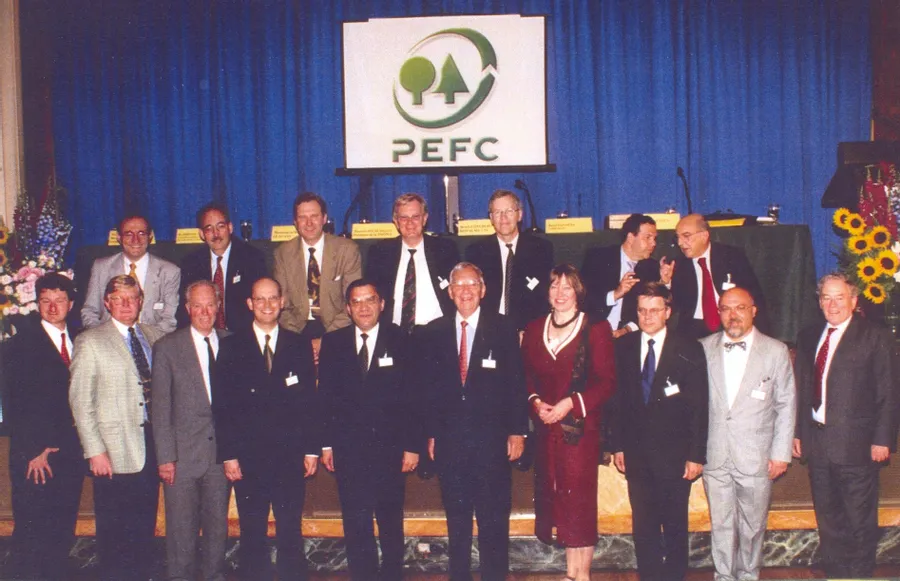
After the successful endorsement of certification systems in Europe, in 2004 Australia and Chile became the first non-European national standards to be endorsed. This meant it was time to change our name: no longer Pan European Forest Certification, but now the Programme for the Endorsement of Forest Certification.
The next few years saw rapid levels of growth, as we hit 100 million hectares of PEFC-certified forest area in 2005 and then 200 million hectares in 2008. The same year we also moved our international headquarters from Luxembourg to Geneva, Switzerland, in order to be closer to our international stakeholders in the UN, non-governmental organizations and other partners.
In 2009, we expanded into two more continents, as the first African (Gabon) and Asian (Malaysia) national forest certification systems achieved endorsement, both in tropical countries.
We became the first global forest certification system to introduce social aspects in chain of custody certification in 2010, and a few years later in 2013, our Chain of Custody standard was aligned with the European Union Timber Regulation (EUTR). The following year we reached the milestone of 10,000 PEFC chain of custody certified companies.

Recent years have seen us continue to grow. In 2016, we hit 300 million hectares of PEFC-certified forest area, and by 2018 there were PEFC endorsed national forest certification systems in 40 countries around the world.
We also continue to innovate. We published the latest edition of our sustainable forest management benchmark standard in 2018, extending the impact of PEFC certification beyond forests and enhancing our contribution to the United Nations Sustainable Development Goals (SDGs). In 2020, we published the revised versions of three vital international standards governing chain of custody certification, trademark use, and conformity assessment.
In between, 2019 saw us reach our 20th anniversary, celebrating this milestone with our 20 years of caring campaign. We told the story of PEFC's beginnings, growth and development, present and future through a range of articles, photos and videos. Check out the overview of the campaign, and discover a little more about PEFC!