

Why Wooden Furniture is Key to Carbon Storage and Sustainability
Wooden furniture made from certified forests locks in carbon for decades. Discover its environmental value and role in reaching climate goals.

Why Wooden Furniture is Key to Carbon Storage and Sustainability
15 December 2025 Sustainable furniture
Wooden furniture is far more than a functional product or a design choice. It is a powerful ally in the fight against climate change.
By storing carbon throughout its lifetime, wood-based furniture continues the vital work that began while the wood was still part of a living tree. When sourced from sustainably managed forests, wooden furniture offers both ecological and aesthetic value, making it one of the most environmentally responsible material choices.
Why wood matters in the climate fight
Forests play a critical role as carbon sinks, absorbing vast amounts of carbon dioxide (CO₂) from the atmosphere through photosynthesis.
Trees store this carbon in their trunks, branches, and roots, and some trees can continue storing carbon for centuries.
According to the United Nations Environment Programme (UNEP), forests remove more than 7 billion metric tonnes of CO₂ from the atmosphere every year.
What is even more remarkable is that this carbon storage does not end when the tree is harvested.
The carbon remains locked within the wood, whether it is in raw logs, semi-finished materials, or a finished piece of furniture.
In essence, the wooden furniture in our homes and offices is actively storing carbon and will continue to do so for as long as the product lasts.
The impact of sustainable forest management
The benefits of wooden furniture as a carbon store are maximised when the wood originates from sustainably managed forests. These forests are carefully maintained to ensure long-term health, biodiversity, and resilience against natural disturbances like wildfires, which are increasing due to climate change.
Sustainable management practices:
- Enhance carbon storage by maintaining the forest’s ability to absorb and retain CO₂ over time.
- Improve species richness, which supports stronger, more resilient ecosystems.
- Reduce vulnerability to natural disturbances, ensuring that forests continue to provide ecological services.
Research shows that sustainably managed forests can store more carbon overall compared to unmanaged or poorly managed forests. This makes sourcing certified wood not just an ethical decision but also a climate-smart one.
Carbon storage throughout a product’s life
The carbon absorbed by a tree during its lifetime remains locked in once it is turned into wooden products.
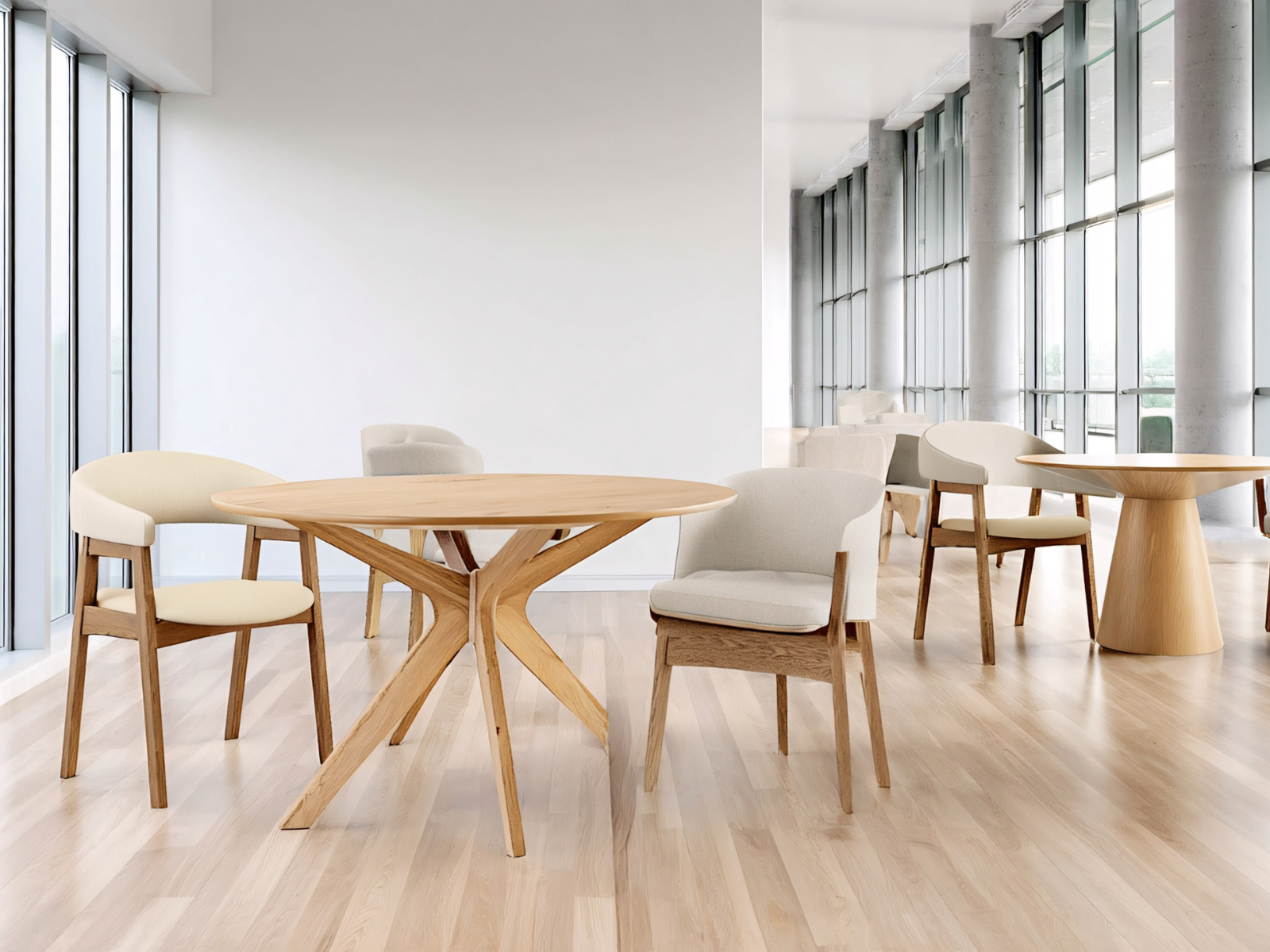
A table, chair, or cabinet made of sustainably sourced wood can act as a long-term carbon store, keeping CO₂ out of the atmosphere for decades or even longer.
Wooden products also have a significantly lower carbon footprint compared to materials like steel, aluminum, or plastic, which require energy-intensive manufacturing processes.
This combination of low emissions and long-term carbon storage makes wood a unique solution for reducing the environmental impact of furniture production.

A marketing and ethical advantage
In a world where consumers are increasingly conscious of sustainability, wooden furniture offers companies a powerful narrative.
Highlighting the carbon storage properties of wood can enhance a brand’s credibility and meet the growing demand for environmentally responsible products.
For businesses, integrating sustainably sourced wood into their supply chains is not only a way to reduce climate impact but also an opportunity to connect with eco-conscious customers.
Carbon storage in furniture is both a tangible climate benefit and a compelling story that can differentiate products in a competitive market.
Looking ahead: furniture as part of the climate solution
Wooden furniture is more than just an interior design choice, it is part of a global climate solution. By sourcing wood responsibly and choosing certified products, designers, manufacturers, and retailers can contribute to reducing greenhouse gas emissions and safeguarding forests for future generations.
As consumers, recognising the value of carbon storage in the furniture we buy is a simple yet meaningful way to support climate action. Every wooden chair, table, or shelf made from sustainably managed forests is a small but lasting step toward a more sustainable future.